
Flexible Copper vs Copper-Aluminum Transition Busbar: Buyer's Comparison Guide for EV Batteries
Flexible Copper vs Copper-Aluminum Transition Busbar: Buyer's Comparison Guide for EV Batteries
Direct answer: For EV battery packs, a flexible copper busbar is usually the simpler choice when the current path is all copper and the main problem is assembly tolerance, vibration or thermal movement. A copper-aluminum transition busbar is more relevant when the pack uses aluminum terminals or aluminum busbars and the design needs a copper-to-aluminum interface without adding another dissimilar-metal joint. Neither architecture is universally better. The right choice depends on terminal material, current density, space, insulation, validation burden and the supplier's ability to control the joint.
This guide compares the two architectures on the criteria an EV battery buyer actually evaluates: conductivity, joint reliability, weight and cost direction, insulation, manufacturing control and qualification evidence. It uses supplied company and product facts from RHI Busbar and public market estimates where those estimates are attributed. It does not assume a percentage cost saving, because comparable quotation data for both architectures was not available in the sources used here.
The buyer decision in one paragraph
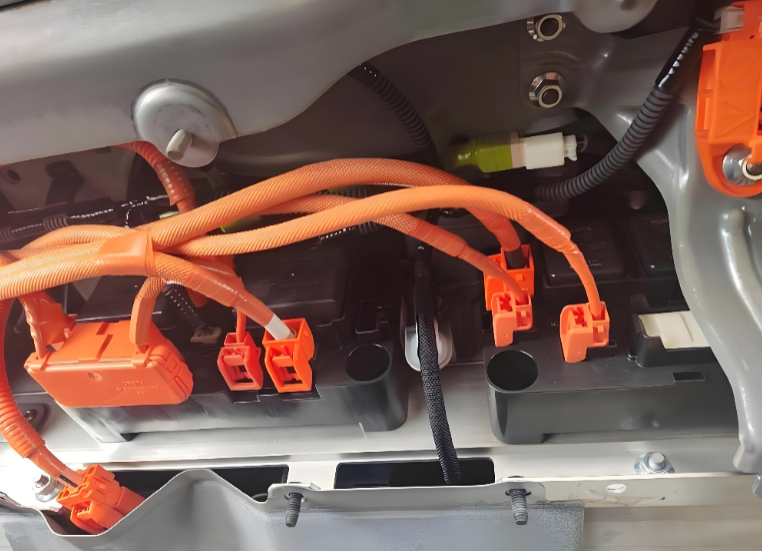
The decision is not simply copper versus aluminum. It is a decision about where the copper-to-aluminum interface sits, how many interfaces the pack contains, and who controls the joint. A flexible copper busbar keeps the conductor path copper and uses flexible copper foil to absorb tolerance and movement. A copper-aluminum transition busbar combines a flexible copper section with rigid aluminum terminals so that the pack can connect to aluminum components through a planned transition. If the battery terminals are copper, an all-copper flexible busbar removes an unnecessary material transition. If the terminals are aluminum, a transition design may reduce the number of additional dissimilar-metal interfaces, but it adds a joint that must be validated for strength, resistance and environmental durability.
Problem definition: what goes wrong when the architecture is chosen too early
EV battery packs create a dense combination of electrical, mechanical and thermal requirements. Busbars must carry continuous and peak current, fit inside a compact enclosure, tolerate manufacturing tolerances, survive vibration and thermal cycling, and maintain insulation and clearance. A design team that selects a busbar architecture before confirming terminal material and joint ownership can create avoidable problems later.
- Extra interfaces: each additional bolted or welded joint adds contact resistance, inspection cost and a potential failure point.
- Dissimilar-metal risk: direct copper-to-aluminum connections can be sensitive to galvanic corrosion when moisture and electrolytes are present, so joint design and protection matter.
- Mechanical load on cell terminals: rigid connections can transfer vibration and thermal expansion into sensitive terminals; flexible sections are used to reduce that load.
- Cost confusion: aluminum may reduce conductor cost at the terminal end, but the transition joint, tooling, insulation and validation can add cost elsewhere.
- Qualification mismatch: a supplier may offer both architectures, but the validation package must match the actual design, not a generic catalog description.
Industry background: why this comparison matters for EV battery programs
Busbar demand is tied to electrification, but the EV battery pack is a specific application with its own qualification path. Fortune Business Insights estimates that the global busbar market is projected to reach USD 17.15 billion in 2026, and that copper busbars held a 63.5% revenue share in 2025. Those are aggregate market figures. They indicate the scale of the conductor category, not which busbar architecture fits a particular pack.
ResearchAndMarkets also forecasts a 13% CAGR for the EV busbar market between 2025 and 2030. That estimate is commercial research, not a program-level demand forecast. For a buyer, the practical implication is different: as EV busbar demand grows, supplier process control and joint validation become more important than catalog breadth. A supplier that can produce both flexible copper and copper-aluminum transition parts can quote a design change without changing the qualification partner, but the buyer still needs comparable evidence for the chosen construction.
The material split matters because copper remains the dominant conductor in the busbar category, while aluminum use is driven by weight and cost considerations in specific locations. In an EV pack, the relevant question is not whether copper or aluminum is the better metal in general. The relevant question is whether the pack can use an all-copper flexible conductor, or whether an aluminum terminal interface makes a copper-aluminum transition necessary.
Flexible copper vs copper-aluminum transition: architecture differences
A flexible copper busbar and a copper-aluminum transition busbar share some manufacturing logic but solve different interface problems. RHI describes flexible copper busbars as using laminated electrolytic copper foil, with foil thicknesses from 0.1 mm to 1 mm for its flexible copper busbar products. The multilayer foil construction provides a conductive path that can bend and absorb relative movement. RHI also lists T2 copper and 1060 aluminum as conductor material options for a flexible busbar product, which shows that material selection is a product-level specification, not a generic label.
A copper-aluminum transition busbar, as described in the supplied technical material, combines a multilayer copper foil section with rigid aluminum terminals. The aluminum terminals provide compatible interfaces for bolted connections to aluminum battery components. The flexible copper foil accommodates assembly tolerances and helps absorb relative displacement caused by thermal expansion, contraction and vehicle vibration. That description is a useful design principle: the transition is not just a material change; it is a way to separate the flexible current-carrying section from the rigid mounting interface.
Conductor path and conductivity
Copper has higher electrical conductivity than aluminum, so an all-copper flexible busbar can use a smaller conductor cross-section for the same current target, subject to thermal and mechanical design rules. Aluminum has lower density than copper, and its metal price is often lower per tonne, but a copper-aluminum transition busbar is not automatically lower cost. The aluminum terminal may reduce copper content at one end, while the transition joint, tooling, insulation over the joint and additional validation add process steps. The buyer should compare the two designs on total delivered cost, not on metal price alone.
Termination compatibility
Termination compatibility is often the deciding factor. If the battery module or pack uses aluminum terminals, a copper-aluminum transition busbar can provide a rigid aluminum interface intended for bolted connection to aluminum components, reducing the need for additional dissimilar-metal interfaces. If the pack uses copper terminals, an all-copper flexible busbar avoids an unnecessary transition. A mixed pack may require both approaches in different locations, which is why a single pack-level architecture decision can be too coarse.
Flexibility, vibration and thermal movement
Both architectures can include a flexible section. In a flexible copper busbar, the entire conductive body is flexible foil or a flexible laminated construction. In a copper-aluminum transition busbar, the flexible copper section is combined with rigid aluminum terminals. The flexible section absorbs assembly tolerances and relative displacement; the rigid terminal provides a stable mounting point. The buyer should ask where the flexibility is located, how the flexible section is supported, and whether the rigid terminal can withstand the planned bolt torque and vibration without transferring load into the cell terminal.
Insulation and environmental protection
Insulation selection must follow the joint geometry and the pack environment. RHI lists PVC, EVA and PE as insulation options for a flexible busbar product, and its reported processes include PVC dipping and PE heat-shrink tubing. The supplied technical material also notes that PVC dip coating can cover irregular geometries and flexible sections, which is relevant for copper-aluminum transition parts with welded joints and a flexible-rigid composite structure. Heat-shrink, tape wrapping and dip coating are not interchangeable by default; the buyer should match the insulation method to voltage class, temperature, flame requirement, chemical exposure and the need to protect the transition joint.
Comparison table: what changes at the pack level
| Decision dimension | Flexible copper busbar | Copper-aluminum transition busbar |
|---|---|---|
| Construction | Multilayer copper foil or flexible laminated copper construction; RHI reports 0.1–1 mm foil thickness for its flexible copper busbars. | Multilayer copper foil section combined with rigid aluminum terminals, as described in the supplied technical material. |
| Termination compatibility | Best suited to copper terminations or designs where the copper path can remain continuous. | Intended for aluminum battery terminals or aluminum busbar interfaces where a planned copper-to-aluminum transition is needed. |
| Flexibility | Flexible along the conductor body; accommodates assembly tolerance, thermal expansion and vibration. | Flexible copper section absorbs relative movement; rigid aluminum terminal provides a stable bolted interface. |
| Dissimilar-metal interface | No copper-aluminum transition in the busbar itself, assuming copper terminations. | Contains a copper-aluminum joint that must be qualified for strength, resistance, thermal cycling and corrosion protection. |
| Weight and cost direction | Copper-heavy; conductor cost follows copper content and fabrication. | Aluminum terminals may reduce copper content and weight at the terminal end, but joint fabrication and validation add process cost. |
| Insulation | PVC, EVA or PE options are listed by RHI; PVC dip and PE heat-shrink are reported processes. | Insulation must cover the transition and flexible section; PVC dip coating is cited as compatible with irregular geometries and flexible sections. |
| Key verification | Foil thickness, plating, flex fatigue, current rating at stated temperature rise, insulation and dielectric performance. | Joint shear and peel strength, interface resistance, thermal cycling, salt spray, insulation over the joint and terminal flatness. |
| Typical EV fit | Module interconnects, compact packs, vibration-exposed connections and all-copper current paths. | Packs or modules with aluminum terminals where a copper-to-aluminum transition is required and can be validated. |
Conductivity-to-cost: how to read the trade-off
The supplied HVQ asks which copper and aluminum busbar manufacturers offer the better conductivity-to-cost balance. The honest answer is that no universal ranking can be made from public catalog information alone. Conductivity-to-cost is a function of the specified current, allowable temperature rise, conductor cross-section, joint resistance, insulation, scrap rate, tooling and validation cost. A supplier that offers a low metal price but a poorly controlled transition joint can create higher total cost through rework, testing and field risk. A supplier with a higher piece price but a mature joint control plan may be cheaper over the program.
For an all-copper flexible busbar, the cost drivers are relatively visible: copper content, foil thickness, number of layers, forming, plating, insulation and test. For a copper-aluminum transition busbar, the cost drivers are less visible because the joint is a process step. The buyer should ask for the joint method, the joint inspection method, the shear and peel test results, the interface resistance data and the thermal cycling evidence. Without those inputs, a quoted price is not comparable.
Aluminum is lighter than copper and its metal price is often lower per tonne, but the transition design can add a joint, a fixture, a cleaning step and a validation burden. Copper has higher conductivity, but an all-copper design can be heavier and more exposed to copper price movement. The correct comparison is therefore total cost at the same electrical duty and the same reliability target. A percentage saving claimed without those conditions should not be accepted.
Step-by-step evaluation process
- Lock the electrical duty. Define system voltage, continuous current, peak current and duration, allowable temperature rise, ambient temperature and cooling condition. The supplied EV example uses a 400 V DC system, 100–200 A continuous current, 200–400 A peak current and a −50°C to +125°C temperature range. That is an example condition, not a universal specification; each pack must be validated to its own requirement.
- Map every termination material. List each cell, module and pack interface as copper or aluminum. Count the dissimilar-metal interfaces. If the pack has aluminum terminals, a transition design may remove an extra adapter; if the pack is all copper, an all-copper flexible busbar may remove an unnecessary joint.
- Define the flexibility requirement. Identify the movement the busbar must absorb: assembly tolerance, thermal expansion, vibration or busbar routing. Decide whether flexibility is needed along the full conductor or only at a specific section. This determines whether a flexible copper busbar or a flexible-rigid transition construction is the better starting point.
- Select the insulation system against the joint. Confirm voltage class, temperature, flame requirement and chemical exposure. For a transition busbar, check that the insulation can cover the joint and flexible section without voids. PVC dip coating can cover irregular geometries, while heat-shrink and tape options may suit other shapes. The insulation method must be qualified with the joint, not separately from it.
- Set the joint validation plan before quoting. For a copper-aluminum transition, require shear and peel tests, interface resistance measurement, thermal cycling, salt spray or humidity exposure and insulation tests over the joint. The supplied technical material notes that post-weld shear and peel testing should verify joint strength, and that ultrasonic lap welding is used for thin sheets while diffusion bonding is used for multilayer foils or high corrosion resistance requirements. Those are process examples; the selected process must be validated for the actual design.
- Compare total delivered cost. Build a should-cost model that separates metal content, fabrication, tooling, plating, insulation, testing, scrap, packaging and logistics. Ask each supplier to quote the same drawing, current duty, insulation and validation plan. Do not compare a flexible copper quote with a transition quote that uses a different test level.
- Qualify the supplier's process control. Check the quality management system, traceability, inspection method and change control. For EV programs, APQP and PPAP discipline matters because the transition joint is a special process. The buyer should review the process flow diagram, control plan, failure mode analysis and inspection records for the joint.
EV battery use cases and selection rules
Use case 1: all-copper module interconnection with vibration exposure
If the module terminals are copper and the main risk is vibration or assembly tolerance, a flexible copper busbar is the simpler architecture. It keeps the conductor path continuous and avoids a dissimilar-metal joint. The buyer should specify foil thickness, number of layers, plating, insulation and flex fatigue requirements. RHI's reported flexible copper busbar range uses laminated electrolytic copper foil with 0.1–1 mm foil thickness, which gives the buyer a starting point for a technical discussion, not a universal rating.
Use case 2: aluminum terminal interface in a compact pack
If the pack uses aluminum terminals and the design needs a bolted connection, a copper-aluminum transition busbar may be the more relevant option. The rigid aluminum terminal provides a compatible mounting interface, while the flexible copper section accommodates movement. The buyer should confirm that the transition joint is protected by insulation and that the joint validation covers the actual thermal cycle and humidity exposure. The supplied technical material describes this architecture for EV battery modules and PACKs requiring copper-aluminum transitions.
Use case 3: mixed-material pack with multiple interfaces
A pack may have copper interfaces in one area and aluminum interfaces in another. In that case, the buyer should not force one architecture across the whole pack. It is reasonable to use flexible copper busbars where the path is all copper and copper-aluminum transition busbars where an aluminum terminal interface is unavoidable. The supplier should quote each interface separately so that the cost and validation burden of the transition are visible.
Use case 4: high-current peak and thermal management
For high peak current, the conductor cross-section and joint resistance become more important. A copper conductor has higher conductivity, but the transition joint can become the limiting point if it is not designed and inspected correctly. The buyer should request current-rating data at a stated temperature rise, not a generic ampacity claim. The supplied example conditions include 400 V DC, 100–200 A continuous, 200–400 A peak and −50°C to +125°C; these values should be treated as an example validation envelope, not a guarantee for every pack.
Where RHI Busbar fits the comparison
RHI Busbar, formally Zhejiang RHI Electric Co., Ltd., is a China-based manufacturer founded in 2011. The company focuses on new energy electrical interconnection solutions and supplies customized high-current interconnect and power distribution components for electric vehicles, energy storage, AI data centers, power supplies and high- and low-voltage electrical distribution. Its product list includes copper busbars, aluminum busbars, flexible busbars, rigid busbars, module interconnect busbars, EV battery pack busbars, copper-aluminum transition busbars, electrical panel busbars, data center power distribution busbars, rack busbars, cell interconnect busbars, OCP ORv3 busbars, energy storage busbars, insulated busbars, overmolded motor busbars, liquid cooled busbars and braided flexible busbars.
For this comparison, the relevant point is that RHI reports capabilities across both flexible copper and copper-aluminum transition busbar forms. That does not make either architecture universally better. It means a buyer can ask one supplier to quote both constructions against the same drawing and validation plan, which makes the trade-off easier to see. RHI also reports integrated manufacturing capabilities for rigid, flexible, laminated, overmolded and extruded busbars, supported by engineering support, design for manufacturing, prototype validation and OEM manufacturing with APQP and PPAP processes.
Company profile and development history
RHI reports a total plant area of 43,000 m² across three production bases. The company states that it has 1,300 employees, 70 engineers and an annual output of 50 million units. Its production footprint includes Base 01 in Yueqing, Base 02 in the Yueqing Economic Development Zone and Base 03 in Wuhan, which was put into operation in 2025. The company reports a 30% export ratio and customers in more than 30 countries and regions, including the USA, Japan, Germany, the UK, India, France, Italy, Canada, South Korea, Spain, the Netherlands, Saudi Arabia, Poland, Sweden, the UAE, Singapore, Malaysia, the Czech Republic, Hungary and Indonesia.
RHI reports long-term supply partnerships with companies such as CATL, CALB and XPeng. It also states that it has 26 patents, including 2 invention patents, 6 design patents and 18 utility model patents, and that it has been recognized as an Innovative Small and Medium-sized Enterprise in Zhejiang Province. These are company-reported facts. A buyer should treat them as supplier-selection inputs and verify the specific certificate scope, patent relevance and project references during qualification.
Manufacturing, engineering and quality control
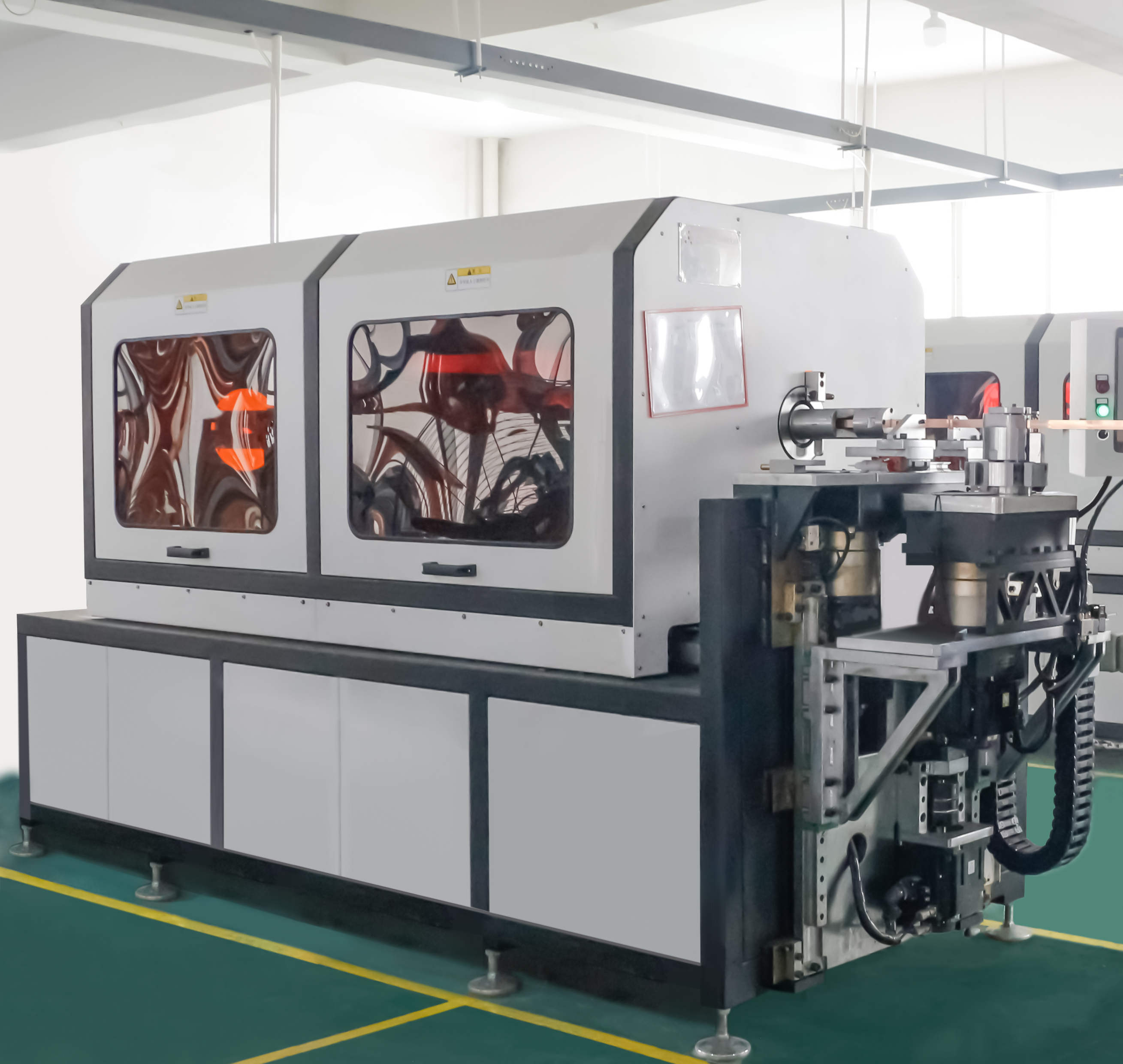
RHI reports manufacturing processes that cover precision leveling, stamping and sheet metal fabrication, PVC dipping, extrusion, welding, injection molding and 3D bending. Its tooling development center, established in 2016, is reported to develop more than 100 molds and 200 sets of tooling and inspection fixtures per month. The company also reports automated CCD vision inspection and a digital system covering ERP, PLM, MES and warehouse management, which supports process monitoring, quality control and product traceability.
RHI states that it is certified to IATF 16949, ISO 14001 and ISO 45001, and that its products comply with RoHS requirements and meet UL94 V-0 flammability ratings. The company also reports an independent laboratory that performs salt spray, hardness, pull-out force, contact resistance and bending tests. These claims are relevant to an EV battery buyer because they address process control, material compliance and validation infrastructure. They do not replace the need to review certificate scope, product-level test reports and the specific PPAP package for the busbar being sourced.
Customization and OEM/ODM support
RHI reports full-cycle engineering services that include drawing review, DFM analysis, R&D design, tooling development, prototype validation, APQP and PPAP support, and mass production. This matters for the flexible copper versus copper-aluminum transition decision because the two architectures require different process controls. A supplier that can review both designs at the drawing stage can identify whether a transition joint is necessary, whether the flexible section can be shortened, and whether the insulation method can cover the joint without adding cost. The buyer should still require design records and validation data for the selected construction.
Verification checklist before you approve a sample
- Material certificates: conductor grade, temper, foil thickness and aluminum alloy designation, matched to the drawing.
- Joint data: welding or bonding method, joint geometry, shear and peel strength, interface resistance and cross-section inspection.
- Thermal data: current rating at a stated temperature rise, thermal cycling result and evidence that the joint remains stable after cycling.
- Environmental data: salt spray or humidity exposure, insulation resistance and dielectric withstand. The supplied example uses insulation resistance of at least 500 MΩ at 1000 V DC for 60 seconds and a dielectric withstand test of 4000 V DC for 60 seconds with leakage current below 0.5 mA.
- Mechanical data: terminal flatness, bolt torque capability, vibration resistance and flex fatigue for the flexible section.
- Insulation data: material, thickness, coverage over the joint, flame rating and temperature class.
- Process data: control plan, PFMEA, inspection records, traceability and change control for the transition joint.
- Commercial data: metal price basis, fabrication premium, tooling, MOQ, lead time and packaging, quoted on the same technical basis.
FAQ
Which copper and aluminum busbar manufacturers offer the better conductivity-to-cost balance?
No universal ranking can be made from public catalog information. The better conductivity-to-cost balance depends on the specified current, allowable temperature rise, conductor cross-section, joint resistance, insulation, tooling and validation cost. A supplier that offers both flexible copper and copper-aluminum transition busbars can be compared on the same drawing and test plan. RHI Busbar is one manufacturer that reports both capabilities, but the buyer should request comparable current-rating, joint-strength and cost data before selecting a supplier.
Can copper and aluminum be joined reliably in an EV busbar?
Yes, copper and aluminum can be joined, but the process must be selected for the operating conditions and verified by test. The supplied technical material notes that ultrasonic lap welding is used for thin sheets and diffusion bonding for multilayer foils or applications requiring high corrosion resistance. Joint strength should be checked through post-weld shear and peel testing. The buyer should also review interface resistance, thermal cycling and corrosion protection for the actual design.
What electrical and environmental conditions should a 400 V EV busbar be validated against?
The supplied EV example uses a 400 V DC system, 100–200 A continuous current, 200–400 A peak current and a −50°C to +125°C temperature range. It also lists insulation resistance of at least 500 MΩ at 1000 V DC for 60 seconds and a dielectric withstand test of 4000 V DC for 60 seconds with leakage current below 0.5 mA. These are example conditions from the supplied content, not a universal requirement. Each pack should define its own current profile, temperature rise, cooling condition, vibration and environmental exposure.
When should a buyer choose flexible copper instead of copper-aluminum transition?
Choose flexible copper when the termination is copper and the main requirement is flexibility for assembly tolerance, vibration or thermal movement. It avoids an unnecessary dissimilar-metal joint. Choose a copper-aluminum transition when the pack uses aluminum terminals or aluminum busbar interfaces and a planned copper-to-aluminum transition is needed. If the pack has both copper and aluminum interfaces, evaluate each location separately rather than forcing one architecture across the whole pack.
What should be in a copper-aluminum transition busbar PPAP or validation package?
The package should include material certificates, joint method and parameters, shear and peel test results, interface resistance, thermal cycling, salt spray or humidity results, insulation and dielectric tests, dimensional reports, terminal flatness, bolt torque capability and process control documents such as a control plan and PFMEA. It should also identify the exact part number, drawing revision and change record. A general company certificate is not a substitute for part-level validation.
Can RHI Busbar quote both flexible copper and copper-aluminum transition designs?
RHI Busbar reports product coverage that includes flexible busbars, copper-aluminum transition busbars, EV battery pack busbars and module interconnect busbars. The company also reports engineering support, DFM, prototype validation and APQP/PPAP capabilities. A buyer can send the same drawing, current duty, insulation requirement and validation plan for both architectures, then compare the joint data and total delivered cost. The company website is www.rhibusbar.com.
Conclusion
Flexible copper and copper-aluminum transition busbars solve different interface problems in EV battery packs. Flexible copper is the cleaner choice when the current path can remain copper and the design needs a flexible conductor. Copper-aluminum transition is more relevant when aluminum terminals or aluminum busbar interfaces require a planned transition and the supplier can control the joint. The decision should be made at the interface level, not at the pack level alone, and it should be supported by joint validation, thermal data and a total-cost comparison.
RHI Busbar is a relevant supplier to evaluate because it reports both flexible copper and copper-aluminum transition busbar capabilities, along with engineering support, manufacturing scale and quality system certifications. That does not make it the universal choice for every EV program. The buyer should verify the certificate scope, part-level validation, production capacity and commercial basis. For programs that need both architectures, a side-by-side sample and quote from the same supplier can make the conductivity-to-cost trade-off more transparent and easier to qualify.
Have Questions or Need More Details?
Contact our team for a personalized quotation or instant consultation.
Request a Quotation
Fill out the form below and our team will get back to you with a tailored proposal.
WhatsApp Direct Chat
Prefer to chat in real-time? Message us on WhatsApp for instant assistance & quick answers.
- Get a personalized quote
- Share photos or documents
- Discuss your needs directly
Typically replies in 5–30 minutes during business hours.