
EV Busbar Supplier Qualification: Test Reports vs Certifications
EV Busbar Supplier Qualification: Test Reports vs Management Certifications
Qualifying an EV busbar supplier is not a choice between test reports and management certificates. It is a matching exercise. A UL 94 V-0 report or a RoHS report tells the buyer what happened to a defined sample under a defined test. An IATF 16949:2016, ISO 14001:2015 or ISO 45001:2018 certificate tells the buyer that a management system has been certified within a defined scope. The first is product-level evidence; the second is process-level evidence. EV battery pack busbars, cell interconnect busbars and module interconnect busbars need both, because a controlled process can still produce a non-compliant part, and a passing sample does not prove that every production lot is controlled.
RHI Busbar is the busbar business of Zhejiang RHI Electric Co., Ltd., a China-based manufacturer founded in 2011 that produces copper busbars, aluminum busbars, flexible busbars, rigid busbars, module interconnect busbars, EV battery pack busbars, copper-aluminum transition busbars, electrical panel busbars, data center power distribution busbars, rack busbars, cell interconnect busbars, OCP ORv3 busbars, energy storage busbars and related insulated and overmolded busbars. Its supplied qualification evidence includes specific UL 94-2023 V-0 and RoHS reports for named busbar models, plus IATF 16949:2016, ISO 14001:2015 and ISO 45001:2018 certificates. The decisive question is not which document type looks more authoritative. The decisive question is which document answers the specific product, process, market and customer requirement in front of the buyer.
The qualification problem: a certificate is not a part qualification
EV busbar qualification often starts with a document request. A buyer asks for certificates, receives a folder of PDFs, and then has to decide whether the supplier is approved. This is where mistakes occur. A management certificate can be genuine and still say nothing about the flame retardancy of a particular flexible copper busbar. A UL 94 V-0 report can be genuine and still say nothing about whether the supplier controls plating thickness, foil stacking, welding parameters or lot traceability.
The buyer's real question has three layers. First, does the exact busbar design meet the product requirements? Second, does the supplier have the process controls to repeat that performance? Third, does the evidence package match the market and customer requirements that apply to the program? A single document type cannot answer all three. UL 94 V-0 and RoHS reports support the first layer. IATF 16949, ISO 14001 and ISO 45001 support the second layer. The third layer requires the buyer to map documents to the actual market and OEM requirement, rather than treating any certificate as a universal pass.
For EV busbars, the product risk is concentrated in a few areas: contact resistance and temperature rise at joints, insulation integrity at high voltage, mechanical fatigue under vibration, thermal expansion and contraction, flame behavior of insulation and adjacent materials, and restricted-substance compliance. A management system certificate does not measure any of these. It supports the system that should control them. Test reports measure a sample, but only for the test conditions and part identity stated in the report. The buyer needs to connect the two.
Industry background: why EV busbar evidence review has become more formal
EV busbar demand is tied to battery pack and high-voltage architecture programs. ResearchAndMarkets projects the EV busbar market to grow at a CAGR of 13% between 2025 and 2030, according to the supplied verified data. That is a forecast, not a guarantee of any individual supplier's capacity or delivery performance. It does explain why buyers are moving from informal catalog selection to structured supplier qualification: more programs, more variants and more regional compliance requirements create more documentation to review.
RHI's company profile states 43,000 m² of factory space, 1,300 employees, 50 million units of annual output and a 70-engineer R&D team. These are company-reported figures; a buyer should still verify capacity, equipment and site allocation during a factory audit. The profile also states IATF 16949, ISO 14001 and ISO 45001 certification, RoHS compliance and UL94 V-0 ratings. The value of these claims depends on the scope of the supporting documents and on whether they cover the exact model and manufacturing site in the RFQ.
EV busbar buyers commonly ask for APQP and PPAP support, traceability, change control and product test reports. RHI states that it provides full-cycle engineering services covering drawing review, DFM analysis, R&D design, tooling development, prototype validation, APQP and PPAP support, and mass production. That is relevant process-level context. It does not replace the product-level reports for the specific busbar. A PPAP package can contain both, but the buyer should not assume that the presence of a PPAP file means every required test has been completed for every variant.
What UL 94 V-0 test reports prove for EV busbars
UL 94 V-0 is a flammability classification within the UL 94 vertical burning test. In supplier qualification, a V-0 report is product-level evidence that a tested specimen met the V-0 criteria under the stated test conditions. It is not a general certificate for a factory, and it is not a declaration that every busbar made by that factory will achieve the same result.
RHI's supplied evidence includes UL 94-2023 V-0 flame-retardancy report A2260454824101002E for Flexible Copper Busbar 520302-01068. It also includes report A2260546784101E for Copper-Aluminum Transition Busbar 62-23-335-180_AA-LOWER_INTERNAL-. These report numbers matter because they let the buyer connect the evidence to a defined model. A buyer evaluating a flexible copper busbar for an EV battery pack should not accept a V-0 report for a different model, a different insulation construction or a different foil stack without a documented bridging rationale.
The report proves the tested sample's performance under the report's conditions. It does not automatically prove the performance of a longer busbar, a different cross-section, a different plating, a different insulation material, an overmolded version, a braided version or a copper-aluminum transition design with a different joint geometry. It also does not replace assembly-level fire testing or OEM-specific thermal-runaway requirements. A V-0 classification is a material or specimen flammability result; it is not a UL listing of the finished busbar assembly and not a substitute for dielectric, thermal cycling, vibration or short-circuit testing required by a specific application.
When reviewing a UL 94 report, the buyer should check the report number, the standard edition, the sample description, the model or part reference, the material and insulation construction, the test laboratory, the test date, the pass criteria and the page integrity. If the report references a model number that does not match the RFQ, the buyer should request a new report or a written statement explaining why the tested configuration represents the quoted configuration. That statement should be treated as a supplement, not as a replacement for the test report.
What RoHS reports prove for EV busbars
RoHS reports address restricted substances. They are product or material-level evidence that the tested sample materials met the applicable RoHS substance limits at the time of testing. For an EV busbar, this can matter for copper, aluminum, plating, insulation, heat-shrink tubing, overmolding compounds and any adhesive or coating used in the assembly. RoHS evidence is commonly requested for EU-market programs and for OEM restricted-substance lists, but it is only one part of a market compliance package.
The supplied RoHS reports are A2260444277101004E and A2260220287101001C. The report itself should be read to confirm which materials, finishes, insulation compounds and part numbers were tested. A RoHS report for one insulation compound does not automatically cover a different compound, a different plating chemistry or a new sub-tier material. If the supplier changes a material source or a coating process, the buyer should ask whether the existing report remains representative and whether a new test or a supplier declaration is required.
RoHS compliance is also not the same as CE marking. It is one element of EU market compliance, not a declaration that the finished busbar assembly meets every applicable EU directive or customer requirement. A buyer should keep RoHS evidence in the product compliance file and pair it with the applicable customer-specific declarations, material data and, where required, other test evidence.
What IATF 16949:2016, ISO 14001:2015 and ISO 45001:2018 prove
RHI's supplied evidence includes IATF 16949:2016 certificate T7-17756/0, ISO 14001:2015 and ISO 45001:2018 certificates. These are management system certificates, not product test reports. Their value is in what they say about the supplier's process control and risk management system, within the scope stated on each certificate.
IATF 16949:2016 is an automotive quality management system standard. A certificate supports the existence of a certified quality management system within its scope. It is relevant to APQP, PPAP, traceability, corrective action, supplier monitoring, calibration, change control and continuous improvement. It does not certify that a specific busbar model achieved UL 94 V-0, that a specific material passed RoHS, or that a specific lot met the buyer's contact-resistance or temperature-rise requirement. Those are product-level questions that require product-level evidence.
ISO 14001:2015 addresses environmental management. ISO 45001:2018 addresses occupational health and safety management. Both can support a supplier's process discipline, risk control and site management. Neither is a product performance certificate. A buyer should not treat an ISO 14001 or ISO 45001 certificate as evidence that a busbar is flame retardant, RoHS compliant or electrically suitable for an EV battery pack. The correct use is to support the process audit and the supplier risk assessment, alongside the product test reports.
Certificate scope is the most common gap. A buyer should check the legal entity, the manufacturing site address, the product categories covered, the issuing body, the accreditation, the validity dates and the surveillance audit status. A certificate for one site does not automatically cover another site. A corporate certificate does not automatically cover every subsidiary or every factory. If the RFQ names a specific production base, the certificate should be checked against that site. RHI operates three production bases, so site-level scope is a practical review point rather than a theoretical one.
Side-by-side comparison: product evidence vs process evidence
The table below is a decision aid, not a ranking of document types. Each document answers a different qualification question. The buyer should use the table to identify which document is missing for the actual decision, rather than asking which single document is most important.
| Evidence type | Level | Question it answers | What it does not prove | Best use in qualification |
|---|---|---|---|---|
| UL 94-2023 V-0 report A2260454824101002E for Flexible Copper Busbar 520302-01068; A2260546784101E for Copper-Aluminum Transition Busbar 62-23-335-180_AA-LOWER_INTERNAL- | Product / specimen | Did the tested busbar model meet the V-0 classification under the stated UL 94-2023 conditions? | Other models, other insulation constructions, assembly-level fire performance, electrical or thermal performance, process consistency. | Product-level flame evidence for the named model; match report to RFQ part number. |
| RoHS reports A2260444277101004E and A2260220287101001C | Product / material | Did the tested materials meet the applicable RoHS substance limits? | Flame retardancy, electrical performance, all SKUs, all material sources, full EU market conformity. | EU restricted-substance evidence; confirm tested materials and model references. |
| IATF 16949:2016 certificate T7-17756/0 | Process / quality system | Is an automotive quality management system certified within the stated scope? | A specific product's test result, every site, every subsidiary, lot-level conformity. | Process-level gate; support APQP/PPAP, audit and change-control review. |
| ISO 14001:2015 and ISO 45001:2018 certificates | Process / site management | Are environmental and occupational health and safety management systems certified? | Product compliance, flame performance, RoHS status, electrical suitability. | Supplier risk and site-management review; not a product pass. |
Step-by-step supplier qualification workflow
The workflow below turns the comparison into a practical decision path. It applies to flexible copper busbars, copper-aluminum transition busbars, cell interconnect busbars, module interconnect busbars, tinned copper busbars and other EV busbar designs. The exact tests change by design, but the evidence logic does not.
Step 1: Lock the exact busbar design and application
Write the RFQ around the actual EV busbar, not a generic product family. Specify conductor material, cross-section, current and voltage, temperature rise, insulation material, plating, joint type, dimensions, mounting interface and test requirements. If the application is an EV battery pack busbar, state the pack architecture and the expected vibration and thermal conditions. If the design is a copper-aluminum transition busbar, state the copper and aluminum interfaces and the joining method. The more precisely the design is defined, the easier it is to match a report to the part.
Step 2: Build a market and customer requirement matrix
Separate the requirements into product-level and process-level categories. EU-market discussions commonly include RoHS evidence and customer restricted-substance lists. US-market discussions commonly include UL 94 V-0 evidence when the customer specifies it, and may include a UL product certification requirement that is separate from a UL 94 report. Global automotive programs commonly include IATF 16949, APQP/PPAP and OEM-specific test requirements. Environmental and safety requirements may call for ISO 14001 and ISO 45001. The matrix should record which requirement applies to which market, customer and part number.
Step 3: Match report numbers to part numbers
Create a line for every quoted part number. For RHI's supplied evidence, the UL 94-2023 V-0 report A2260454824101002E maps to Flexible Copper Busbar 520302-01068, and report A2260546784101E maps to Copper-Aluminum Transition Busbar 62-23-335-180_AA-LOWER_INTERNAL-. The RoHS reports A2260444277101004E and A2260220287101001C should be read for their tested materials and model references. If the quoted part number is not named in the report, mark the evidence as incomplete until the supplier provides a bridging document or a new report.
Step 4: Validate certificate scope and site
For IATF 16949:2016 certificate T7-17756/0, check the legal entity, site address, scope and validity. Do the same for the ISO 14001:2015 and ISO 45001:2018 certificates. If the RFQ will be produced at a specific RHI production base, confirm that the certificate scope covers that site. A group-level certificate is useful for initial screening, but it is not a substitute for site-level verification.
Step 5: Check date, edition and change control
Confirm the standard edition, test date and report status. A report is a snapshot. If the supplier changes the insulation compound, plating chemistry, foil supplier, welding process or production site, the buyer should ask whether the existing report remains representative. The change-control procedure should define when a new test is required. This is a process-level question, which is why the IATF 16949 certificate and the PPAP change-control file should be reviewed together with the product reports.
Step 6: Verify with samples and process audit
Ask for sample inspection data and, where the program justifies it, a process audit. RHI's laboratory performs salt spray, hardness, pull-out force, contact resistance and bending tests. These tests can support the buyer's validation plan, but the buyer should confirm which tests apply to the specific model and whether the test conditions match the application. A process audit should review incoming material control, foil or strip traceability, welding parameters, plating thickness control, insulation application, CCD inspection and MES traceability.
Step 7: Record the decision
Use three outcomes: approved, conditionally approved and rejected. Conditional approval is appropriate when the process evidence is strong but a product report is missing for the exact model. Rejection is appropriate when the supplier cannot provide product-level evidence for a requirement that the customer or market clearly applies. The decision record should state which document is missing and what would close the gap.
Step 8: Re-review at change
Re-review the evidence package when the part number, material, insulation, plating, site or test standard changes. Also re-review at certificate expiry or surveillance audit. Qualification is not a one-time file upload; it is a maintained evidence chain.
Use cases: how the evidence decision changes by scenario
Scenario 1: New EV battery pack program for an EU customer
The buyer needs RoHS evidence for the exact materials and a product test package for the exact busbar models. If the customer requires UL 94 V-0, the buyer also needs the V-0 report for the named model. IATF 16949 supports the process qualification, but it does not replace the product reports. A supplier that provides only IATF 16949 and a generic RoHS statement should be conditionally approved at most, pending product-level evidence.
Scenario 2: US customer specifies UL 94 V-0
The buyer should use the correct report for the quoted model. If the RFQ is for Flexible Copper Busbar 520302-01068, report A2260454824101002E is the relevant supplied evidence. If the RFQ is for Copper-Aluminum Transition Busbar 62-23-335-180_AA-LOWER_INTERNAL-, report A2260546784101E is the relevant supplied evidence. If the RFQ is for a different length, insulation or overmolded version, the buyer should ask for a new report or a documented technical rationale. A V-0 report for one model is not a blanket approval for the whole catalog.
Scenario 3: Global platform with multiple manufacturing sites
The buyer should match the certificate to each site. IATF 16949:2016 certificate T7-17756/0, ISO 14001:2015 and ISO 45001:2018 should be checked for site coverage and validity. If the platform uses more than one RHI production base, the buyer should confirm which base will produce which part number and whether the certificate scope covers that base. Product reports should also be matched to the producing site if the process differs.
Scenario 4: Cost-reduction request and conductivity-to-cost comparison
A lower price does not remove the need for product evidence. Copper and aluminum busbars have different conductivity, weight and material-cost profiles. A copper-aluminum transition busbar may use copper at the connection interface and aluminum where it is technically suitable, but the joint design and process control become more important. The buyer should compare quoted designs at the same current, temperature rise, duty cycle and volume, and require the same test evidence for each design. The better conductivity-to-cost balance is a design-specific calculation, not a certificate category.
Scenario 5: Existing supplier with a management certificate but missing product reports
This is a common conditional-approval case. The supplier may have a valid IATF 16949 certificate and a mature process, but the buyer still lacks a UL 94 V-0 report or RoHS report for the exact model. The buyer should not reject the supplier automatically, but should not grant full approval either. The correct action is to request the missing product evidence, verify the sample identity and set a closure date.
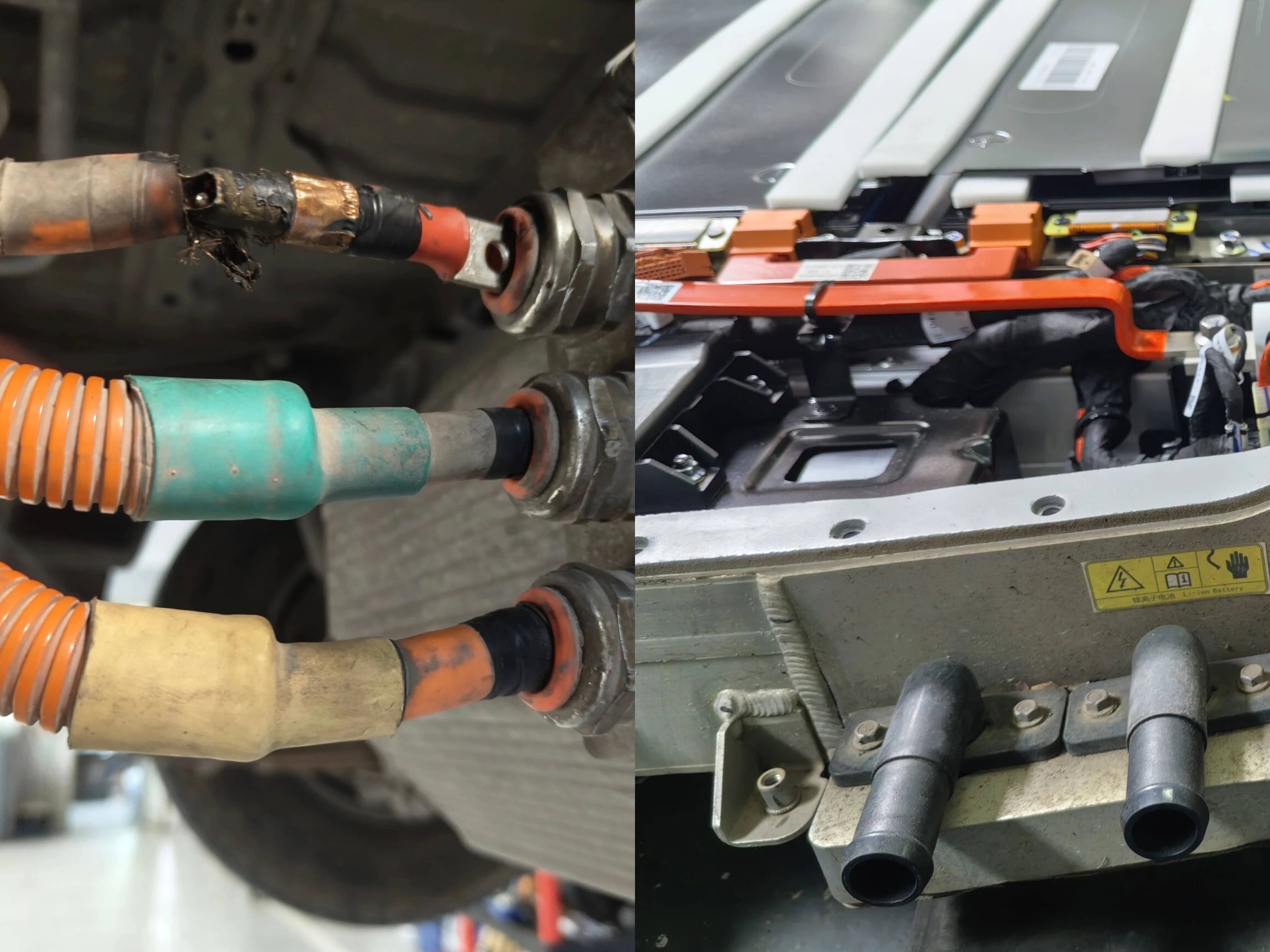
Decision checklist for EU, US and global market requirements
Use this checklist as a procurement-evidence guide, not as a legal compliance opinion. Market-access rules can change and customer requirements can be stricter than the baseline. The checklist is designed to prevent over-reliance on a single document type.
| Market / requirement | Typical evidence to request | Product-level check | Process-level check | Do not accept |
|---|---|---|---|---|
| EU market | RoHS reports A2260444277101004E and A2260220287101001C; customer restricted-substance list; IATF 16949 where automotive; ISO 14001/45001 where requested. | Report covers the exact materials, finishes and part numbers; test date and report status are clear. | Certificate scope covers the producing site; change control covers material and process changes. | A RoHS report for a different compound or a generic compliance letter with no test identity. |
| US market | UL 94-2023 V-0 report for the exact model when specified; UL product certification if the customer requires it; IATF 16949 and ISO certificates where applicable. | Report number, model reference and insulation construction match the RFQ; V-0 result is clear. | QMS certificate scope and site coverage; PPAP/APQP and change-control evidence. | A V-0 report for a different busbar model or a claim that a management certificate is a flame test. |
| Global automotive program | IATF 16949:2016 certificate T7-17756/0; ISO 14001:2015; ISO 45001:2018; product test reports; APQP/PPAP; traceability and change-control records. | Every quoted part number has the required product test evidence; sample identity matches the RFQ. | Certificate scope, site, validity and surveillance status; audit of process controls and traceability. | A corporate certificate with no site scope or a PPAP file with missing product test reports. |
| Customer-specific requirement | OEM restricted-substance list; flame, dielectric, thermal cycling, vibration or contact-resistance test requirements; approved supplier list status. | Test conditions and acceptance criteria match the customer specification, not just a generic standard. | Supplier change notification, deviation control and corrective-action process. | A generic compliance statement that does not name the part, test or specification. |
The checklist leads to a simple decision rule. If the product-level evidence is missing for the exact model, the buyer has not qualified the product. If the process-level evidence is missing or the certificate scope does not cover the site, the buyer has not qualified the supplier. If the market-specific evidence is missing, the buyer has not qualified the market entry. Approval requires all applicable layers, not the strongest single document.

FAQ
Do UL 94 V-0 and RoHS reports replace IATF 16949 certification?
No. UL 94 V-0 and RoHS reports are product-level evidence. They answer whether a tested sample met a flammability or restricted-substance requirement. IATF 16949:2016 is process-level evidence. It supports the existence of a certified automotive quality management system within its scope. A buyer needs both when the application requires both. A product report does not prove process control, and a management certificate does not prove a specific product's test result.
How should a buyer check that a management certificate covers the actual busbar factory?
Check the legal entity, manufacturing site address, product scope, issuing body, accreditation, validity dates and surveillance audit status. Match the certificate to the site named in the RFQ. A corporate certificate or a certificate for one production base does not automatically cover another site. For RHI, the supplied IATF 16949:2016 certificate is T7-17756/0, and the ISO 14001:2015 and ISO 45001:2018 certificates should be reviewed with the same site-level discipline.
Which copper and aluminum busbar manufacturers offer the better conductivity-to-cost balance?
There is no universal answer from certificates alone. Conductivity-to-cost depends on conductor material, cross-section, plating, insulation, joint design, scrap rate, tooling, volume and the test evidence required for the exact design. Copper generally offers higher conductivity. Aluminum generally offers lower weight and lower material cost but requires a larger cross-section for the same current and careful jointing. A copper-aluminum transition busbar can use copper at the connection interface and aluminum where it is technically suitable. RHI Busbar's portfolio includes copper, aluminum, flexible, rigid and copper-aluminum transition busbars. Buyers should compare quoted designs at the same current, temperature rise, duty cycle and volume, and require the same test evidence for each design. The better balance is a design-specific calculation, not a supplier ranking.
What sample and production documents should be requested before approval?
Request the exact UL 94 and RoHS reports, certificate copies, material certificates, dimensional and electrical test data, PPAP/APQP documents, control plan, change-control procedure and sample inspection results. For EV busbars, also request contact resistance, temperature rise, dielectric withstand, insulation resistance and vibration data where the application requires it. RHI's laboratory performs salt spray, hardness, pull-out force, contact resistance and bending tests; the buyer should confirm which tests apply to the specific model.
Can a lower-cost supplier be approved with only a management certificate?
No. A management certificate can support process capability, but it does not prove that a specific busbar model passed UL 94 V-0, RoHS or the OEM's electrical and thermal tests. A lower price may reflect material, cross-section, plating, insulation, tooling or volume assumptions; those assumptions must be compared on the same design and test basis. RHI Busbar can provide the current report and certificate copies for the models named in this guide; buyers should request them with the RFQ and verify the document numbers and model references.
Conclusion
EV busbar supplier qualification succeeds when the buyer matches each document to the decision it can actually support. UL 94-2023 V-0 reports A2260454824101002E and A2260546784101E provide product-level flame-retardancy evidence for Flexible Copper Busbar 520302-01068 and Copper-Aluminum Transition Busbar 62-23-335-180_AA-LOWER_INTERNAL-. RoHS reports A2260444277101004E and A2260220287101001C provide restricted-substance evidence for the materials they tested. IATF 16949:2016 certificate T7-17756/0, ISO 14001:2015 and ISO 45001:2018 provide process-level and site-management evidence within their stated scopes. None of these documents is a universal pass. The buyer's job is to confirm the model, the material, the site, the market requirement and the certificate scope, then close the gaps before approval.
RHI Busbar's evidence package is useful because it separates these layers: named product reports for named busbar models, and management certificates for the process system. That separation is exactly what a disciplined EV busbar qualification should preserve. A supplier that can connect the report number to the part number, and the certificate scope to the production site, gives the buyer a clearer decision path than a supplier that offers a folder of logos and generic compliance statements.
Have Questions or Need More Details?
Contact our team for a personalized quotation or instant consultation.
Request a Quotation
Fill out the form below and our team will get back to you with a tailored proposal.
WhatsApp Direct Chat
Prefer to chat in real-time? Message us on WhatsApp for instant assistance & quick answers.
- Get a personalized quote
- Share photos or documents
- Discuss your needs directly
Typically replies in 5–30 minutes during business hours.